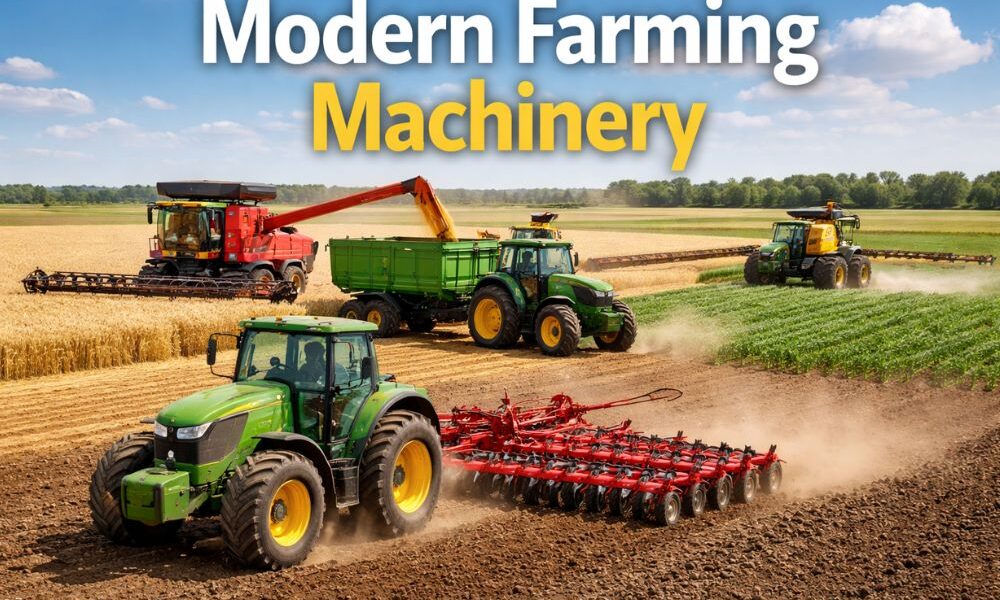
Agriculture has undergone a major shift from traditional practices to the use of modern farming machinery. Farming is no longer limited to manual labor alone; technology now plays an important role in improving efficiency, increasing crop production, and supporting sustainable methods. Modern machines have made many farm operations faster, easier, and more accurate, reducing the time and effort required in the field. These advancements are transforming agriculture and helping farmers manage their work more effectively and productively.
Modern Farming Machineries
As you delve into the world of modern farming, the term “modern farming machinery” encompasses a diverse array of high-tech equipment designed to meet the demands of contemporary agriculture. These machineries have made farming more efficient and easier to manage for farmers. This shift is not just about replacing tools, but about improving farm work to handle different agricultural challenges.
Modern farming machineries now includes technologies like GPS guidance, automated controls, and simple data systems. These features help farmers carry out planting, harvesting, and crop monitoring more accurately and efficiently. Equipment such as advanced tractors and crop-monitoring drones supports a wide range of farm operations and improves overall field management.
From Traditional to Modern Farming
The shift from traditional to modern farming has happened to meet growing food needs and manage environmental challenges. Traditional methods, while rooted in centuries of practice, often involved labor-intensive activities and generic applications of resources such as seeds and fertilizers. Modern farming methods now offer more efficient and practical ways to manage farm work.
New technologies have made farming more organized and systematic. For instance, precision agriculture uses technology to ensure crops receive nutrients at the most opportune time, maximizing your yield while minimizing waste. By contrast, traditional farming would rely heavily on guesswork and routine schedules. These changes not only increase productivity but also support sustainable and environmentally friendly farming.
Types of Modern Farming Machineries
Today, there are many types of modern farming machinery, each designed to make farm work easier and more efficient. Here’s an overview of some key machineries transforming agriculture:
- Tractors: These are essential machines in modern farming, and some models come with GPS support for better field planning and monitoring.
- Harvesters: Combine harvesters help complete harvesting, threshing, and cleaning in a single operation.
- Seed Drills: These ensure even distribution of seeds, which enhances germination rates and increases overall yield.
- Drones: These are used to monitor crop health and field conditions from above.
- Sprayers: Modern sprayers help apply fertilizers and pesticides evenly, reducing waste and costs.
How Technology Helps Farm Work
Technology plays an important role in modern farming by making many farm activities easier and more efficient. GPS-enabled tractors help avoid overlapping work and ensure better field coverage. This technology reduces soil compaction and enhances plant health. This reduces manual effort and helps you manage farm work more accurately.
Drones are also used to monitor fields from above and check crop conditions. They help you cover large areas, identify problem spots, and understand crop health. This information helps you plan irrigation and pest control better, leading to improved crop yield.
Challenges in Using Modern Machinery
While modern farming machineries offer many benefits, farmers may also face some challenges in using it. One of the main challenges is the high cost of purchasing and maintaining the machinery. Advanced equipment requires a large investment, which can be difficult for small farmers. Farmers may also need training and time to learn how to use new machines properly.
If a machine breaks down or stops working, farm operations may be delayed. Also, new technologies keep coming, so machines may need upgrades or replacement after some time.
Improving Productivity and Sustainability
Modern farming machineries play an important role in improving farm productivity and supporting sustainable agriculture. With the help of technology, farmers can increase production and manage farm work more efficiently. For example, modern equipment helps reduce waste and use seeds, fertilizers, and pesticides more effectively.
Modern machinery also supports environmentally friendly farming. Machines that save water, reduce chemical use, and lower fuel consumption help protect the environment. This not only supports ecological balance but also enhances your farm’s reputation and compliance with environmental regulations.
The Future of Modern Farming
The future of modern farming lies in the continued integration of technology with agriculture. As you look ahead, expect advancements in automation, artificial intelligence, and biotechnology to drive the next wave of transformation. Automatic tractors and machines that need less manual work are being developed to reduce labour and improve accuracy.
Developments in AI will take data analytics to the next level, providing real-time insights and predictive analytics that empower you to make proactive decisions. At the same time, new eco-friendly technologies will help increase production while protecting natural resources.
In conclusion, modern farming machineries have changed the way farming is done by improving efficiency, productivity, and sustainability. While there are challenges, the benefits far outweigh the drawbacks, offering you a pathway to elevate your farming operations. As technology continues to evolve, so too will your ability to adapt and thrive in an ever-changing agricultural landscape.